CD – Oscillations
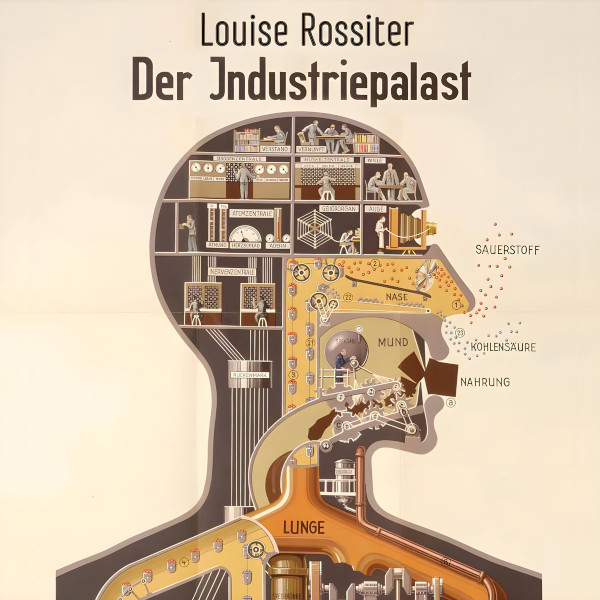
For this project, the acoustic composer and performer with a strong classical background, Louise Rossiter, recorded several instruments – piano, violin, viola and percussion – generating numerous sounds that she then transformed, processed and organised into a library of samples, using them in Kontakt and recording them in a free and expressive way with a simple MIDI controller. Der Industrieplast, released by Oscillations in 2023, highlighted Rossiter’s interest in research that intertwines sonic imagery and historical references, with explicit reference to Fritz Kahn’s famous infographics. In the three tracks that made up that first implementation – ‘Homo Machina’, ‘Neuronen’ and ‘Synapse’ – the human body is translated into an acoustic landscape that oscillates between compelling pulsations, mechanical noises and electrical currents, tracing a path that erodes the biological, evoking a reflection on sound materialism. In this second chapter, featuring four tracks, ‘Fairytale Journey on the Bloodstream’, ‘Iris Key’ ‘Kernal’, and ‘I_O’, Rossiter continues the investigation by further developing the relationship between body and machine. Sound materials, always suspended between concreteness and abstraction, are articulated into more complex structures, where the acoustic data is intertwined with an almost theatrical dimension. The result is a work that not only expands the insights of the first installment but deepens them, suggesting new perspectives on how sound can translate and reinterpret images, processes, and mechanisms of the human. Even in the famous life-size poster from 1926, Der Mensch als Industriepalast, which provided the initial inspiration and was partly used for the artwork, the depiction of the human body is imagined as a sort of factory, with workers employed in various departments. The body becomes a business organisation, with multiple lines of production, where the organic functions are compared by Kahn to industrial processes or daily office situations, thus representing in a simple way complex mechanisms. If Kahn used visual images and metaphors to explain the complexity of the human body, Rossiter now transforms those insights into soundscapes, inviting the listener on a journey not dissimilar, yet guided by the ear. It is in this continuous interplay between science, aesthetics and imagination that the project finds its strength, offering a reflection, both rigorous and evocative, on the relationship between organism and machine.
Louise Rossiter – Der Industrieplast, Pt. II