LP – Corvo
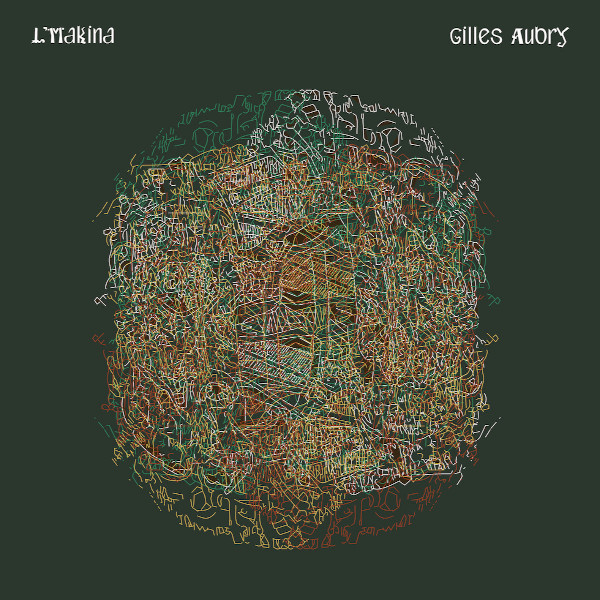
L’Makina by Gilles Aubry takes the title of a song from the 1930s by the famous musician L’Haj Belaid, dedicated to one of the new media forms of that time: the phonograph. As often happens in the history of music, the arrival of unpublished instruments and formats aroused distrust among both artists and the public. Belaid realised that the machine, a symbol of modernity, could replace the musician, anticipating contemporary reflections on the relationship between human, AI and machine learning. Aubry, implementing those suggestions, uses sounds generated through a machine learning-based timbre analysis algorithm (RAVE), processing recordings of Rwais’ instruments from Moroccan as input data. The result is a project that puts the sonic memory of popular repertoires in dialogue with the synthetic production of the machine, highlighting both the possibilities and limits of an artificial intelligence unable to grasp the social and ethical dimension of music. The opera, released by Corvo Records, features Ali Faiq on vocals and Idr Bazrou on lotar and rebab, key instruments of the Rwais tradition. In this interweaving, technology does not replace musical practice but becomes a critical interlocutor, opening up questions about the nature of shared human and non-human creativity. The disc is articulated in two long sections. ‘L’Makina – Part 1’ (17:39) evolves through a distant sound fabric, where fragments of traditional instruments seem transformed and recontextualised. Electronic edges and grainy cuts create a sense of suspense, while vocals and strings emerge as distant echoes, in a continuous slide between presence and absence. The structure does not follow overt climaxes, but gradual accumulations of density, as if the machine itself were breathing, questioning the idea of narrative linearity. ‘The Machine – Part 2’ (16:19) maintains a streamlined character, but explores more accentuated dynamics. The electronic textures become layered, with metallic reverbs and pulsations that evoke cosmic scenarios. These traditional voices and instruments do not appear as direct quotations, but as material recomposed by the algorithm, which redraws the timbre qualities in an unpredictable way. The impression is that of a constantly changing environment, coherent even in fluidity, not an exercise in sound design, but a multi-layered reflection: on cultural memory, on the limits and potentialities of the machine. Aubry proposes a complex dialogue, in which the distance between Belaid’s phonograph and today’s algorithms seems to cancel out into a single interrogation: what remains of the human when the machine takes our voice?
Gilles Aubry – L’Makina