cassette – Staalplaat
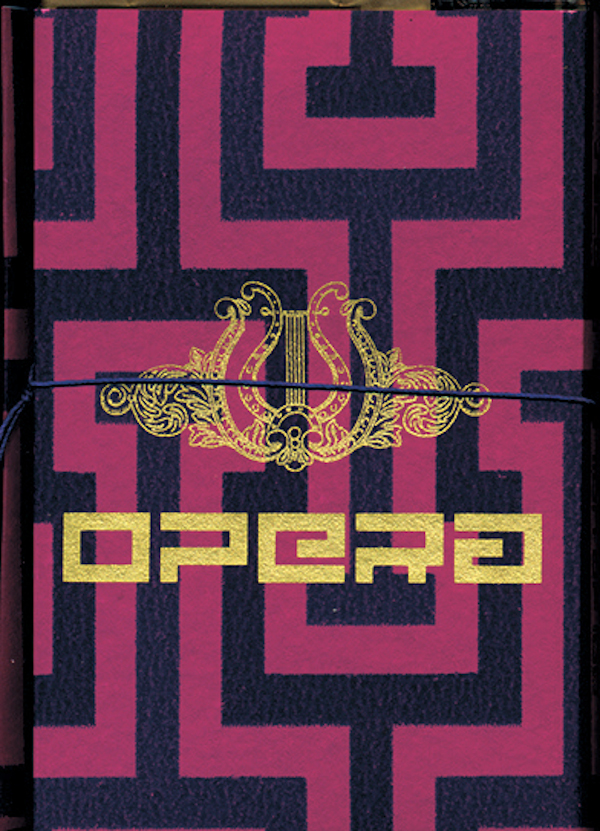
Forty years have passed since the first publication of Opera by FNTC, published by Staalplaat, when the cassette format was not yet an aesthetic choice, as often happens today, but a necessity dictated above all by production costs and distribution methods. The underground scene of the time was profoundly different from today’s scenes, and opting for such a medium implied a creative urgency, the possibility of reaching alternative spaces, and a form of direct sharing with those who experienced music as a collective and experimental experience. The recent reissue, once again on cassette and also available in digital format, rediscovers the depth of the original performance, making accessible material that for decades has circulated in limited and often unevenly quality copies, thus restoring the density and complexity of a listening experience that escapes all fixity. The artwork also contributes to reviving the spirit of the project: recovered from Willem de Ridder’s archives, the collage created together with Peter Pontiac offers a powerful visual counterpoint, capable of evoking the same interweaving of chaos and sonic finesse that runs through the musical structure, adding a further layer of interpretation to the layered nature of the experience. FNTC was a Dutch sound art and performance collective, an acronym for Foundation for New Technology and Culture , not really a band in the traditional sense, but a fluid, interdisciplinary group that operated across sound experimentation, performance art, improvisation, radio art, and installations. Their approach, also influenced by Fluxus, a movement to which De Ridder belonged, was based on instant composing: an instantaneous, collective and performative production, in which organization and improvisation intertwined without rigid boundaries, allowing ever-changing solutions to emerge with each performance. The result was a hybrid language, where voices, violin, found objects, and tape manipulations were gathering in a continuous flow, closer to a “theater of listening” than to a conventional musical recording. Opera, recorded in the summer of 1986 and presented at the time as an immersive multichannel experience, captures that attitude well: the audience, blindfolded and stretched out on sofas, was invited to perceive sound as space, as a changing architecture, rather than as a simple succession of events. Listening to it again today, the piece retains its visionary nature intact, a composition that transcends disciplinary boundaries and challenges categories, recalling how the avant-garde of those years knew how to move between raw energy, conceptual thinking, and a compositional freedom that has rarely been represented with equal intensity.
FNTC – Opera