CD – Gruenrekorder
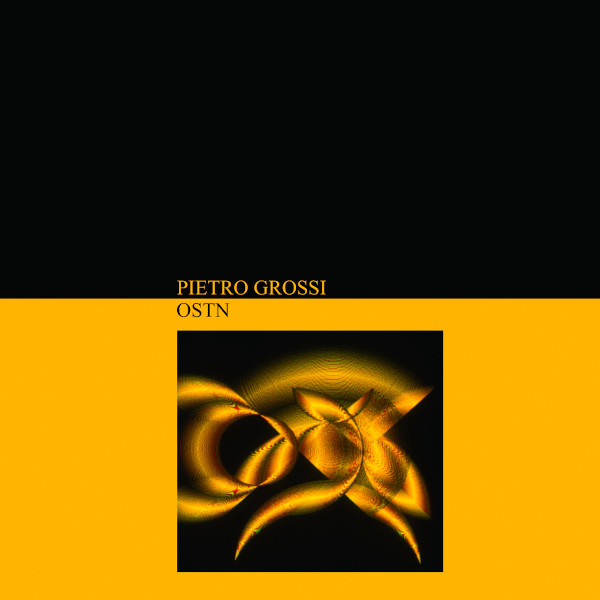
A thought process deeply rooted in reality and then codified into abstract models, guided the career of Pietro Grossi who passed away in 2002. A composer, theoretician, pioneer of music informatics and founder of the Studio di Fonologia in Florence, Grossi supported a mathematical and procedural approach to music, anticipating what today we would call algorithmic logic. Although beginning as a classically trained cellist, his revolutionary spirit focused on liberating the musician from ‘inert instruments’, that is, traditional instruments, in favor of music without performers, where listening is the center and technology becomes a tool of emancipation. His was a utopian but lucid vision: to free musical production from the physical effort of performance, to focus on the organisation of sound as experience and architecture. On this new release by Gruenrekorder, as part of the impressive Sound Art Series collection, Sergio Armaroli becomes the interpreter and medium of Grossi’s thought process. A composer, teacher and scholar of Grossi’s work, Armaroli has dedicated years to a deep understanding of that process, to the point of becoming one of its most authoritative contemporary interpreters. The six tracks of OSTN (Ostinati) for vibraphone and tape are not simple performances, but sound translations. Armaroli defines them as ‘moving soundscapes’: soundscapes in motion that maintain the specific grain of each field as the center of sonic gravity. The vibraphone, chosen as an instrument of resonance and distance, becomes an ideal bridge with Grossi’s vision, for its ability to produce suspended, fleeting sounds, capable of inhabiting space without dominating it. The OSTN series is based on this basis, where each ostinato develops a distinct sound identity. The first covers the entire range of the vibraphone with a constant tremolo, from slow to fast. The second dissolves a single tremolo into interval jumps that intertwine with the tape in a non-melodic legato. The third explores the rhythmic aspect with slow and constant pulsations. The fourth, evocative and immaterial, is described by Armaroli as ‘voice of the dead’ or ‘ethereal voices’. The fifth is a contemplative pause, of suspension and deep listening. The sixth and final brings the body back on stage, through a fragmented improvisation, that is ‘almost furious but diluted’. OSTN is more than a tribute: it is an act of live transmission, a demonstration of how Grossi’s sound research can still generate new listening and new forms of musical thought today. A legacy that continues to transform.
Pietro Grossi (Sergio Armaroli) – OSTN