CD – empreintes DIGITALes
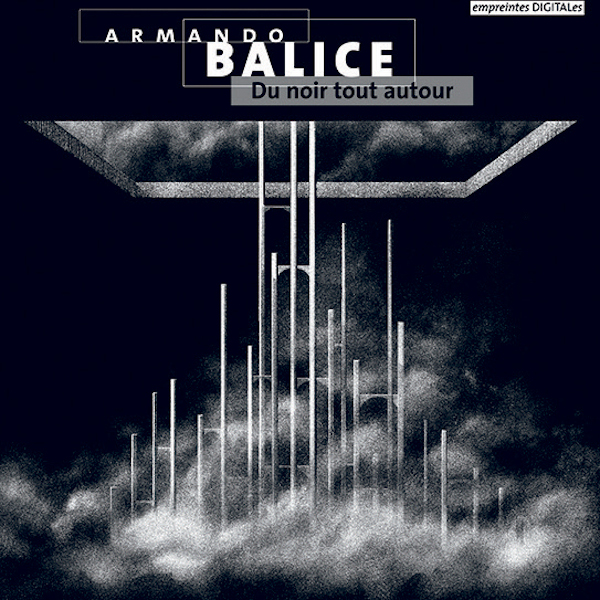
The symbolic figure of the garden—a recurring presence in cultural debate between the 20th and 21st centuries, embodied with a surprising capacity to resonate across diverse expressive fields—has not exhausted its evocative power and continues to surface today. A space both real and mental, a place of contemplation but also of transformation, the garden lends itself to being interpreted as a threshold: a territory where order and spontaneous growth coexist and where nature is appropriately cultivated and left free to expand, capable to surprise with minute details, welcome the silence between the leaves, and restore its hidden intensity to the visitor. Du noir tout autour by the acousmatic compose Armando Balice, published by empreintes DIGITALes, revolves exactly around this image. The work is structured as a triptych—”Black Garden,” “Empty Garden,” and “Light Garden”—which takes the garden as a metaphor for an interior perception of the world. Rather than describing a landscape, Balice seems to explore its conditions: darkness as a space of germination, emptiness as a potential origin, light as a moment of revelation. From this perspective, the garden becomes a field of forces, a sonic environment traversed by subtle tensions and materials that slowly emerge from the acoustic penumbra. The three compositions that structure the work—each just over twenty minutes—share the same formal architecture, structured into eight seamless movements. In “Black Garden,” the listening experience is concentrated around dark presences, where deep resonances, rustlings, and sudden material densities evoke a landscape in which destruction and generation remain intimately intertwined. “Empty Garden,” on the other hand, introduces a more rarefied dimension: the sound appears suspended, scattered throughout a space that favors pauses and openings, as if the void evoked by the title were the very condition from which the sonic material slowly emerges. With “Light Garden,” the plot gradually brightens; the acoustic material—including ambient recordings, electronic interventions, and the intermittent presence of the cello—arranges itself in brighter configurations, suggesting a process of emergence and rebalancing that closes the triptych without entirely dissolving accumulated tensions. In this sonic space, Balice transforms each fragment—from the breathing of the forest to the timbre of the cello, from the synthetic oscillation to the chirping of birds—into living matter, capable of vibrating in the listening space and becoming an image. Du noir tout autour does not tell a linear story, but constructs an immersive experience, a sound garden in which light and darkness intertwine, and the visitor can recognize, through echoes and suspensions, the wonder of what emerges from the silence.
Armando Balice – Du noir tout autour