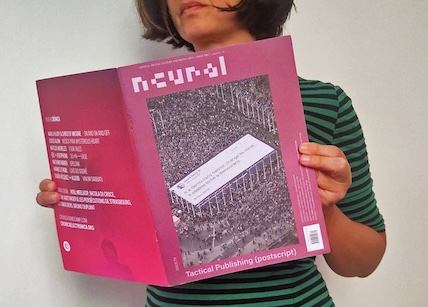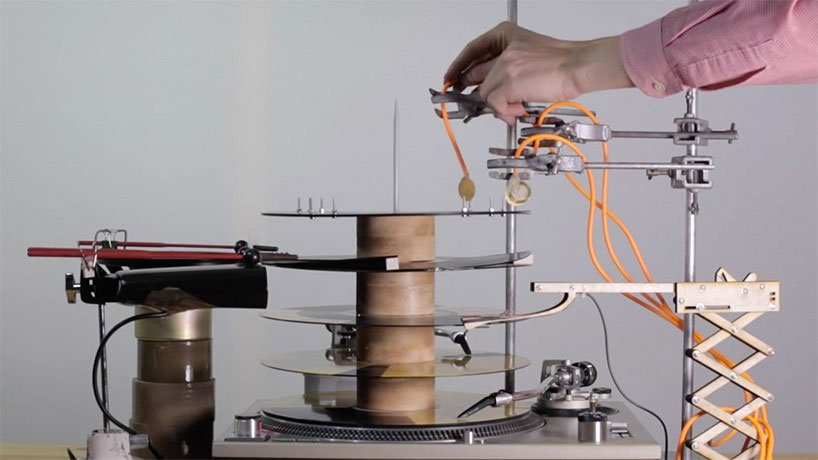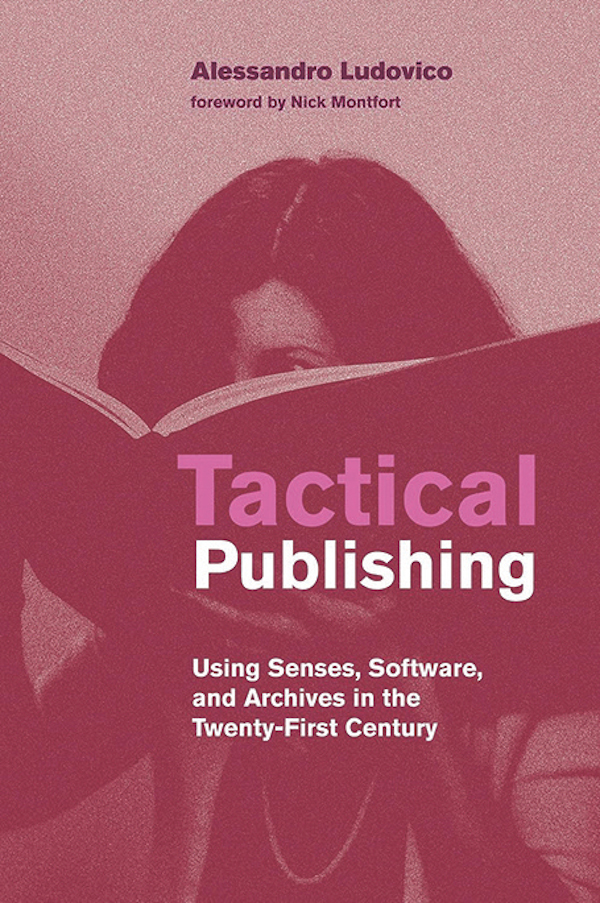
The MIT Press, book, ISBN 978-0262542050, English, 336 pages, 2024, USA
If Marshall McLuhan’s The Gutenberg Galaxy: The Making of Typographic Man (1962) predicted the imminent demise of print-based culture, it could not, however, have predicted the seismic scale of the shift that the author anticipated. The revolution that was yet to come would send gravitational waves through publishing, all defined and mediated by the electron. We are still emerging from the clashing and dichotomous world where print and digital were seen as separate competing modes of publishing, each with their own unique contingencies and audiences. Tactical Publishing offers an historical glance at how publishing has evolved in the post-print/post-digital era and more importantly presents a provocation for where it might be heading. By arguing that future-proof publishing will embrace technology and the use of hybrid strategies, the book offers a blueprint for what the dominant profiles for media publishing might look like in the future. The book is both historical and theoretical in its outlook, and offers a compendium of successful experimental publications in its large appendix. Early in the book we learn how publishing has evolved to appease a mind greedy for information, and who’s senses are like black holes sucking reality in at ever increasing speeds, undaunted by the proliferation of sensual forms. The discussion explores how experimental publications have incorporated tactile, olfactory, and physical elements to reshape how audiences experience and sense information, and celebrates the continued staying power of the physical object in a world subsumed by the predictive capital of automated text. The opening chapter makes a call to action by encouraging publishers and artists to rethink the material boundaries of their books to embrace hybrid mediums. The book, moves to expand upon the idea of authorship and publishing to include our collaborations with machines, By mapping a narrative arc from Raymon Llull’s earliest experiments to the machinic operations central to the idea of groups such as Oulipo, Tactical Publishing makes the case that technologies may evolve but methodologies have often remained the same. The book suggests that while remaining critical of the sudden arrival of statistically predictive texts generated by LLM’s, we should also remain open to the creative misuse of these technologies too. Tactical Publishing argues that archives must act as dynamic and distributed institutions that preserve, reinterpret, and redistribute cultural knowledge. By framing libraries as “guerrilla” actors within media ecosystems, the book highlights the potential support for alternative publishing communities. The book ends with a lively discussion of some optimal publishing models for the future that take a hybrid stance into account, and that promote a strong integration between the analogue and the digital. It pushes the idea of open, scalable and networked ecologies that act as an antidote to the growing expanse of consumer-orientated and centralised screen-based ecologies. As a call to action, the chapter proposes what the author has termed object-oriented publishing – a model that combines the essential premises of responsible editorialship with audience interaction. Tactical Publishing argues a strong case for consistency by extending and refracting information through the differences of its modalities and media. This may act to amplify and focus a message or editorial context, or indeed to creatively conflate or confound it. The book explores this strategy as a kind of ‘reversioning’ of a message so it can be extended as something new. For all the current advances in technology and automation we are currently seeing, I get a strong impression that what remains important is the continuation of grass root communities of publishers, artists, and technologists who convene, in digital or physical space, to evolve their practices with intentful consideration of their audiences. To this end, the book makes a clear nod towards the virtues of distributed ecologies of publishing that foster living constellations of knowledge. Tactical Publishing is both a provocation and a possible manifesto for future generations of publishers.